Introduction
Titanium is one of the most versatile metals on Earth, prized for its unique combination of strength, light weight, and corrosion resistance. From aerospace to medicine, its properties make it indispensable in countless industries.
This guide breaks down the most common and critical uses of titanium, explaining why it’s the material of choice for so many applications.
1. Aerospace and Aviation
Titanium is a staple in the aerospace industry, where every component must be both strong and lightweight:
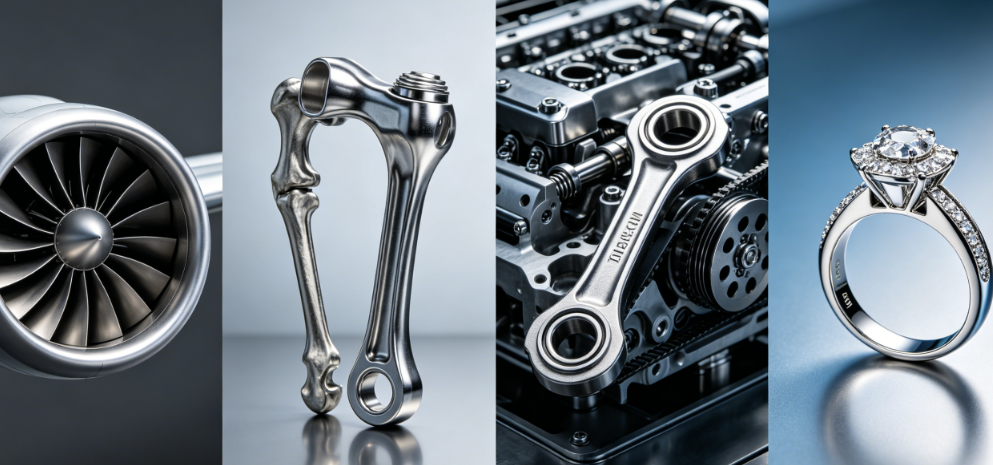
Aircraft frames and engines: Titanium alloys are used in jet engine components, landing gear, and structural parts, as they withstand high temperatures and reduce overall weight, improving fuel efficiency.
Spacecraft: Titanium’s resistance to extreme temperatures and radiation makes it ideal for rockets, satellites, and space station components.
2. Medical and Healthcare
Titanium’s biocompatibility makes it irreplaceable in medicine:
Implants: Hip and knee replacements, dental roots, and spinal hardware use titanium because it fuses with bone (osseointegration) without causing rejection.
Surgical tools: Lightweight, durable titanium instruments reduce surgeon fatigue and are easy to sterilize.
3. Automotive and Motorsports
In high-performance vehicles, titanium is used to boost speed and durability:
Exhaust systems: Titanium exhausts are lighter than steel, reducing weight and improving exhaust flow for better performance.
Engine components: Connecting rods, valves, and forged axles made of titanium reduce rotating mass, leading to quicker acceleration.
4. Marine and Industrial
Titanium’s corrosion resistance makes it perfect for harsh environments:
Marine hardware: Boat propellers, hull fittings, and desalination plant components resist saltwater corrosion, outlasting stainless steel.
Chemical processing: Heat exchangers, pipes, and reactors use titanium to handle corrosive chemicals.
5. Consumer and Lifestyle
Titanium’s unique properties also make it popular in everyday products:
Jewelry: Hypoallergenic titanium rings, earrings, and piercings are ideal for sensitive skin.
Sporting goods: Golf clubs, bicycle frames, and diving equipment use titanium for its light weight and strength.
Watches: Titanium watches are lightweight, scratch-resistant, and corrosion-resistant.
Conclusion
From life-saving medical implants to high-flying aircraft, titanium’s applications are as diverse as its properties. Its strength, light weight, and resistance to corrosion make it a material that continues to drive innovation across industries. For buyers, understanding these uses is key to selecting the right titanium grade and form for any project.
FAQ4 min read·2026-06-11
What Is Titanium Used For? A Complete Guide to Its Key Applications
A practical CNBJTI answer to "What is titanium used for?", exploring its diverse applications across industries. Includes buyer-focused notes on grade, processing, certification, and key RFQ details.