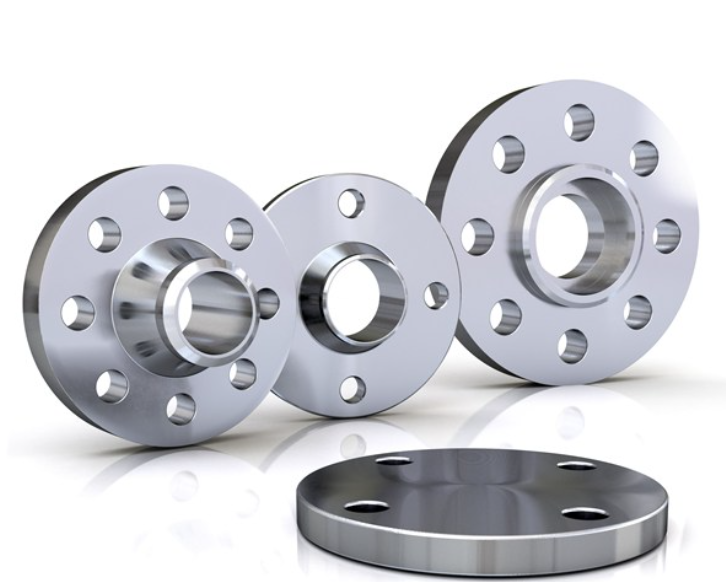
Titanium flanges are critical connecting components for industrial piping systems. Compared with carbon steel, stainless steel and alloy steel flanges, titanium flanges stand out for their exceptional corrosion resistance, low density, high tensile strength and stable performance under extreme temperatures. These unique material properties make them the preferred choice for harsh working environments where ordinary metal flanges cannot survive long-term service.
What are titanium flanges?
Titanium flanges are manufactured from pure titanium or titanium alloy forgings, following standards such as ASTM B381, ASME B16.5 and DIN/EN. Common types include lap joint flanges, weld neck flanges, slip-on flanges and blind flanges. They are used to connect pipes, valves, pressure vessels and equipment, enabling easy assembly, disassembly and inspection of pipeline systems.
Grades like Titanium Grade 2 and Grade 7 are widely used for flange production. Grade 7 titanium contains palladium addition, which greatly improves resistance to crevice corrosion and acid environments, making it ideal for oil & gas, chemical and seawater handling projects.
Main Industries Using Titanium Flanges
1. Chemical & Petrochemical Industry
The chemical industry handles aggressive media including hydrochloric acid, organic acids, chlorine and chloride solutions. Conventional steel flanges suffer rapid corrosion and leakage. Titanium flanges maintain stable performance in these corrosive fluids, reducing pipeline maintenance frequency and safety risks. They are widely installed in chemical reactors, acid transport pipelines and mixing systems.
2. Oil & Gas / Downstream Processing
For offshore platforms and onshore sour gas fields, pipelines face hydrogen sulfide, brine and high-pressure conditions. Titanium flanges (especially Grade 7) meet anti-sulfide requirements and resist chloride stress corrosion cracking. They are applied in wellhead assemblies, process piping and seawater injection systems.
3. Desalination & Marine Engineering
Seawater contains high chloride ions that cause pitting corrosion to stainless steel. Titanium is fully resistant to seawater corrosion at all temperatures. Titanium flanges are used for seawater desalination plants, ship piping, offshore cooling systems and submarine equipment connections.
4. Power Generation
Geothermal power plants carry hot brine with heavy corrosive ions. Waste heat recovery and flue gas desulfurization (FGD) systems in thermal power stations also require anti-corrosion piping. Titanium flanges guarantee long service life in these hot, wet and corrosive working conditions.
5. Pharmaceutical & Food Processing
Titanium is biocompatible and non-toxic, with a smooth surface that prevents bacterial buildup. Titanium flanges are adopted for clean pipelines in pharmaceutical production, food and beverage processing, meeting strict hygiene requirements for media transportation.
6. Aerospace & Aviation
Titanium’s high strength and low weight reduce overall system weight. Titanium flanges connect hydraulic, fuel and pneumatic pipelines on aircraft and ground test facilities.
Core Advantages of Titanium Flanges
Superior corrosion resistance against seawater, chlorides, acidic and alkaline media.
High strength-to-weight ratio, lighter than steel while maintaining mechanical strength.
Stable mechanical properties under high and low temperature.
Non-magnetic, suitable for special magnetic-sensitive equipment.
Long service life, lower total lifecycle cost despite higher upfront material cost.
Key Notes for Titanium Flange Procurement
Confirm material grade: Pure Ti Grade 2 for general corrosion, Ti Grade7 for severe chloride / sour service.
Match standards: ASTM B381 for forgings, ASME or DIN/EN for dimensional requirements.
Select flange type according to installation: Lap joint flanges pair with stub ends for easy alignment.
Request material test certificates (MTC) such as EN 10204 3.1 for quality verification.
Final Thoughts
Titanium flanges are not a universal replacement for steel flanges. They are a targeted solution for corrosive, high-reliability industrial piping projects. When media contains chlorides, brine or acidic compounds, titanium flanges become the most cost-effective long-term option.
If you need titanium flanges or matching lap joint stub ends, contact our team for factory quotation and technical support.
Technical Guide5 min read·2026-10-08
Titanium Flanges: Applications Across Key Industrial Sectors
Titanium flanges deliver outstanding corrosion resistance and high strength-to-weight ratio. Explore major industries that use titanium flanges, working conditions, material grades and key advantages for piping