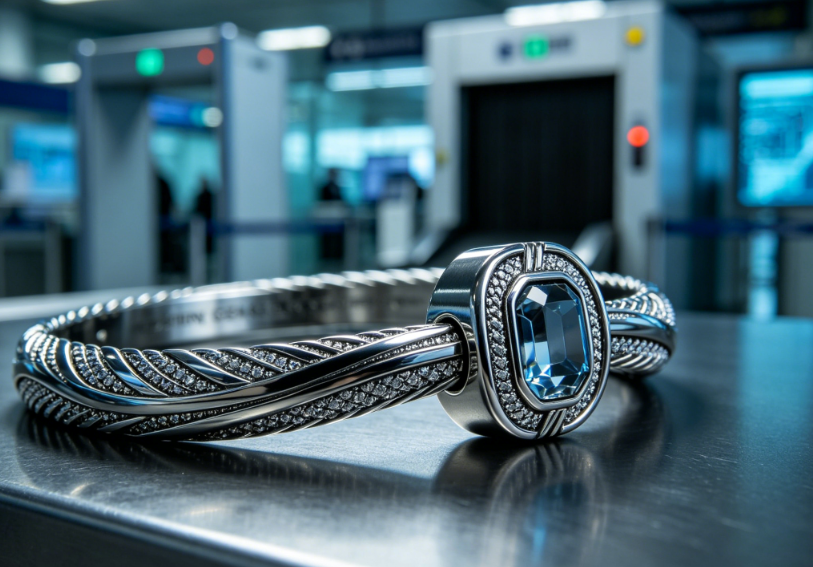
Introduction
Titanium is often thought of as “invisible” to metal detectors, making it a popular choice for jewelry, medical implants, and travel accessories. But is this really true? The short answer is: titanium rarely triggers metal detectors, but it’s not entirely undetectable.
This guide explores the science behind how metal detectors work, why titanium is so hard to detect, and the myths and realities of using titanium through airport security.
How Metal Detectors Work
To understand why titanium is different, it’s important to know how metal detectors operate:
Ferrous metals (iron, steel): These are highly magnetic and easily detected by both walk-through and hand-held detectors.
Non-ferrous metals (aluminum, copper, titanium): These are not magnetic, so they’re harder to detect. Detectors rely on conductivity to pick them up.
Detector sensitivity: Higher sensitivity settings can detect smaller, less conductive metals like titanium. Airport security typically uses calibrated settings that rarely trigger on titanium.
Why Titanium Rarely Triggers Alarms
Titanium’s properties make it a poor target for metal detectors:
Low magnetic permeability: Titanium is non-magnetic, so it doesn’t interact with the magnetic field of the detector the way steel does.
Low electrical conductivity: Compared to metals like copper or aluminum, titanium has much lower conductivity, making it harder for detectors to register a signal.
Density and mass: Small titanium objects (like jewelry or fasteners) have too little mass to create a strong enough signal. Larger titanium parts may trigger high-sensitivity detectors, but they’re rare in everyday use.
The Reality at Airport Security
Most people with titanium jewelry, watches, or even medical implants pass through airport metal detectors without issue.
Walk-through detectors: Standard airport settings are calibrated to ignore small non-ferrous metals, so titanium items almost never trigger an alarm.
Hand-held wands: These are more sensitive, but even then, small titanium objects are often not picked up.
Medical implants: Titanium hip or knee replacements rarely set off alarms, though some people with larger implants may be subject to additional screening.
Common Myths Debunked
Myth: Titanium is completely undetectable.
Fact: While hard to detect, titanium can be picked up by high-sensitivity detectors or if the object is large enough.
Myth: Titanium jewelry will never trigger an alarm.
Fact: Very large or thick titanium pieces might set off some detectors, but it’s extremely rare.
Myth: Titanium implants always cause problems at security.
Fact: Most modern titanium implants are designed to be non-magnetic and rarely trigger alarms. Carrying a doctor’s note is still recommended.
Tips for Traveling with Titanium
Remove large items if possible: If you have a thick titanium watch or belt buckle, removing it before screening can avoid any potential issues.
Carry documentation for implants: If you have a titanium medical implant, bring a doctor’s note to explain it, just in case.
Cooperate with additional screening: If you do trigger an alarm, it’s usually a quick check with a hand-held wand.
Conclusion
Titanium is not entirely invisible to metal detectors, but its low magnetic permeability and conductivity make it extremely difficult to detect with standard airport equipment. For most everyday uses, including jewelry and small accessories, you won’t have any issues. The myths about titanium being a “security risk” are largely unfounded, making it a great choice for travel-friendly products.
FAQ4 min read·2026-06-10
Does Titanium Set Off a Metal Detector? Exploring the Truth Behind Airport Security Myths
A practical CNBJTI answer to "Does Titanium Set Off a Metal Detector?", breaking down why titanium rarely triggers alarms, key factors like grade and detector sensitivity, common airport myths, and buyer-focused notes on processing, certification, and RFQ details.