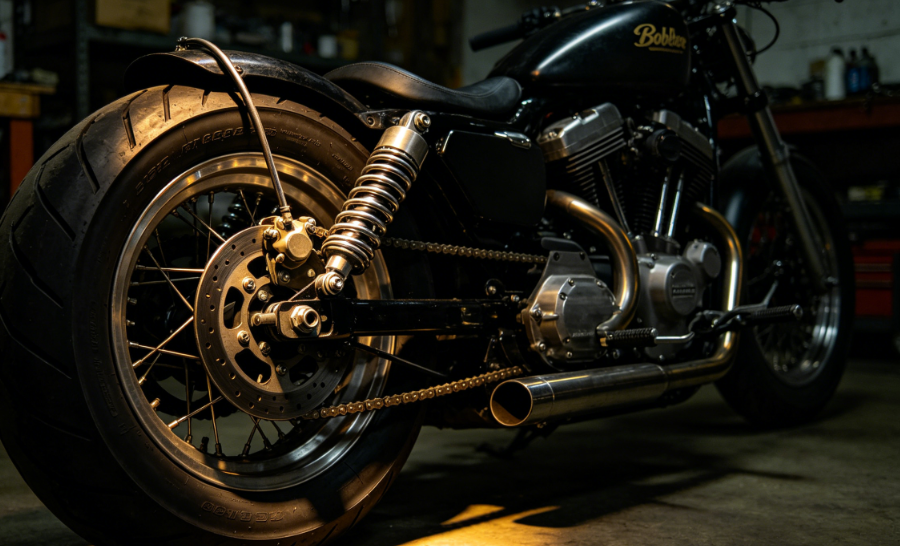
When you look for a performance upgrade that rewards every corner, every track day, and every season of riding, the smallest parts matter most. Titanium fasteners for motorcycles — bolts, flange nuts, spacers, and screw sets machined from aerospace-grade titanium alloy — have become a standard choice among road riders, custom builders, and race teams because they combine light weight, real strength, and long-term durability in one material.
This guide explains the main advantages of titanium bolts for motorcycles, compares the common titanium grades, and outlines the installation best practices that keep the upgrade safe and reliable. Whether you are building a cafe racer, maintaining a sport tourer, or preparing a track bike, understanding what titanium brings to your fasteners helps you choose the right component for each location.
1. Up to 40–45% Lighter Than Equivalent Steel Fasteners
Titanium has a density of roughly 4.43–4.51 g/cm³, compared with about 7.85 g/cm³ for ordinary steel. In practice, a Grade 5 titanium bolt weighs approximately 40–45% less than the same-size steel fastener, with comparable mechanical performance.
That saving may look small on a single screw, but it compounds across a full motorcycle: fairing bolts, bodywork fasteners, brake caliper bolts, engine covers, subframe hardware, and exhaust mounting points. A complete fastener kit can remove hundreds of grams to more than a kilogram of unneeded mass.
The benefit is clearest on parts near the wheels and suspension:
Lower unsprung mass improves how the suspension follows the road surface.
Reduced overall weight contributes to sharper steering response and quicker acceleration.
Lightweight hardware helps track teams stay within balance and weight requirements.
For a street bike, the improvement feels like a more nimble, responsive machine; for a race bike, every gram removed is a measurable performance gain.
2. Industry-Leading Strength-to-Weight Ratio
The core reason motorcycles use titanium is its exceptional strength-to-weight ratio. Grade 5 titanium (Ti-6Al-4V), the most common alloy for performance fasteners, reaches tensile strengths of approximately 900–1,100 MPa in finished condition — on a par with, or above, many common high-strength steel grades, while remaining nearly half the weight.
This means you are not trading strength for lightness. The bolt still clamps its components securely, resists static loads, and holds torque under normal service conditions, but it carries that strength at a far lower mass. Engineers value this balance in aerospace, racing, and demanding industrial applications; motorcycle builders apply the same principle to bodywork, covers, and accessory mounting hardware.
It is important to distinguish strength from hardness: titanium is strong in tension, but it is generally softer than heat-treated alloy steel. For this reason, it should be matched to the appropriate load position rather than substituted blindly for every structural bolt on the bike.
3. Superior Corrosion and Rust Resistance, Even in Harsh Conditions
Steel fasteners rust, and protection depends on paint, zinc plating, chrome, or anodizing that can chip, scratch, and eventually fail. Titanium behaves differently: on contact with oxygen it immediately forms a thin, stable, self-healing oxide layer (TiO₂) that protects the underlying metal.
This natural passive film gives titanium motorcycle bolts strong resistance to:
Road moisture and daily rain
Coastal air, salt spray, and seawater exposure
Road salt used in winter weather
Humid garage and outdoor storage conditions
For riders near the coast, in snowy regions, or who wash their bike frequently, titanium fasteners do not develop the orange rust stains that discolor fairings and make steel screws seize in their threaded holes. There is no coating to flake off, and the finish remains clean year after year.
4. Strong Fatigue Performance Under Engine and Road Vibration
Motorcycles are harsh fastener environments. Engines, exhaust systems, and fairings transmit continuous vibration and repeated loading, which can loosen ordinary bolts over time and lead to metal fatigue.
Titanium alloys offer good fatigue strength, meaning they tolerate repeated stress cycles and vibration without progressive crack growth. In high-vibration locations such as engine covers, bodywork panels, and bracket mounts, well-specified titanium hardware maintains clamp load and resists loosening better than low-grade steel subjected to the same cycle.
Combined with correct torque, thread engagement, and suitable locking methods where required, titanium fasteners contribute to a tidy, stable assembly that survives long miles on both road and track.
5. Heat Resistance for Engine and Exhaust Areas
Titanium retains useful mechanical properties at elevated temperatures that would weaken or oxidize many ordinary fasteners. Its resistance to sustained heat makes it suitable for locations close to the engine, header pipes, and exhaust mounting hardware, where steel screws can suffer thermal aging, rust scale, or seizure over time.
Grade 2 (CP titanium) and Grade 5 each suit different thermal and structural needs; builders commonly reserve heat-resistant, lighter titanium hardware for exhaust brackets, heat shields, and near-engine covers, selecting the grade according to local temperature and load.
6. A Clean, Premium Appearance With Nothing to Peel Away
Beyond function, titanium delivers a visible aesthetic upgrade. Its natural silver-gray metallic luster gives engines, fairings, and custom builds a clean, factory-race appearance. Colored anodized or coated titanium fasteners are also available for builders who want a coordinated accent with frame, wheels, or bodywork.
Because there is no plated outer layer to chip or discolor, the finish ages gracefully. Bolts stay consistent in appearance after washdown, riding in rain, and exposure to sunlight — an advantage chrome-plated or zinc-coated steel fasteners cannot match over years of use.
7. Smooth Compatibility With Aluminum Motorcycle Components
Modern motorcycles use aluminum frames, swingarms, engine cases, and bodywork brackets. Steel bolts threaded into aluminum can cause galvanic corrosion, rust staining, and — after years of moisture — cold welding or seizure that makes removal destructive.
Titanium is broadly compatible with aluminum assemblies, minimizing this contact-corrosion problem. Titanium hardware threaded into aluminum housings tends to come apart cleanly during later service, without rust binding the threads together. This reduces repair damage and keeps future maintenance straightforward.
Which Titanium Grade Should You Choose?
Grade 2 — Commercially Pure Titanium
Grade 2 is soft, formable, and highly corrosion-resistant. It suits non-structural bodywork, decorative fasteners, and low-load locations where maximum corrosion protection matters more than high tensile strength.
Grade 5 (Ti-6Al-4V) — Titanium Alloy
Grade 5 is the performance standard for motorcycle titanium fasteners. Its aluminum-vanadium addition raises strength and stiffness, making it the preferred alloy for bolts, flange nuts, and fastener kits on engine covers, fairings, brake brackets, and other loaded mounting points. Always confirm the required strength class and grade with the component and the manufacturer's specification.
Important Considerations Before Upgrading
The benefits are real, but titanium demands correct installation. Keep these points in mind:
Anti-seize and galling: Titanium is prone to thread galling and cold welding when tightened dry. Apply a suitable titanium anti-seize or high-temperature thread lubricant as recommended by the fastener supplier.
Lower torque values: Titanium has different ductility and elasticity than steel. Follow the manufacturer's titanium-specific torque specification; do not reuse steel torque figures, which can overstress or stretch the bolt.
Match the load position: Reserve titanium for locations where light weight and corrosion resistance matter. Do not replace high-load, safety-critical structural bolts without professional confirmation of strength, diameter, thread engagement, and applicable standards.
Initial cost is higher: Titanium fasteners cost more per piece than stock steel hardware. The purchase is justified by weight savings, corrosion life, retained appearance, and serviceability rather than by a low upfront price.
Quality and certification matter: Source fasteners produced from verified Grade 5 bar stock, with controlled machining and, where required, material test reports such as EN 10204 3.1 certification, to ensure consistent material and mechanical properties.
Where Titanium Fasteners Work Best on a Motorcycle
Titanium is most often chosen for:
Fairing and bodywork bolts and clips
Engine cover and casing fasteners
Exhaust brackets, heat shields, and heat-area mounts
Brake caliper, lever, and accessory mounting hardware
Subframe, panel, and custom-build finishing screws
Specialized track-day weight-reduction kits
For each position, select the correct diameter, length, thread pitch, drive type (hex, socket head, Torx, flange head), and grade to match the original design intent.
Frequently Asked Questions
Are titanium bolts better for motorcycles?
For performance-focused riders, titanium bolts offer a favorable combination of lower weight, high strength-to-weight ratio, natural corrosion resistance, and clean appearance. They are especially valuable on sport bikes, track bikes, custom builds, and coastal or salt-exposed machines.
How much lighter are titanium motorcycle bolts than steel?
A Grade 5 titanium fastener is generally about 40–45% lighter than the equivalent steel bolt, because titanium's density (around 4.43–4.51 g/cm³) is far lower than steel's (about 7.85 g/cm³). A full fastener kit can reduce several hundred grams to more than a kilogram of total mass.
Do titanium motorcycle bolts rust?
Titanium forms a self-healing TiO₂ oxide layer that protects it against moisture, salt spray, and road salt, so titanium fasteners do not rust like ordinary steel. Their natural finish resists corrosion in most on-road and coastal riding environments.
Can I replace every steel bolt on my motorcycle with titanium?
Not blindly. Titanium should be matched to each load position, strength requirement, and torque specification. Safety-critical and highly loaded structural fasteners should be upgraded only after confirming the correct grade, size, and mechanical suitability with an engineer or qualified supplier.
Why do titanium bolts need anti-seize compound?
Titanium threads can gall and cold-weld under friction during installation. A proper anti-seize lubricant controls friction, protects the thread surface, ensures accurate clamp load at target torque, and allows clean removal during later maintenance.
Conclusion
The advantages of titanium fasteners for motorcycles come down to one balanced package: meaningful weight reduction, high strength per gram, lifelong corrosion resistance, reliable vibration performance, and a premium finish that stays clean through seasons of riding. Grade 5 Ti-6Al-4V remains the go-to alloy for loaded motorcycle hardware, while commercially pure titanium suits lower-load and appearance-focused positions.
Used in the right locations and installed with the correct torque, anti-seize compound, and matching specifications, titanium hardware turns a routine fastener replacement into a lasting performance and styling upgrade.
Need custom titanium bolts, flange nuts, or a full fastener kit for your motorcycle model? Share your bolt sizes, thread pitches, quantities, and target grade, and request a quotation with available material certification.
Technical Guide5 min read·2026-10-28
Advantages of Titanium Fasteners for Motorcycles: Buyer's Guide
Titanium fasteners for motorcycles are up to 45% lighter than steel, high strength-to-weight, rust-resistant Grade 5 Ti-6Al-4V bolts for street and track bikes.